
Our Gorgeous boy Blue who we cared for then found him the perfect forever home
Emaciated dog amazing recovery after RSPCA rescue in Barrow
29th October 2025
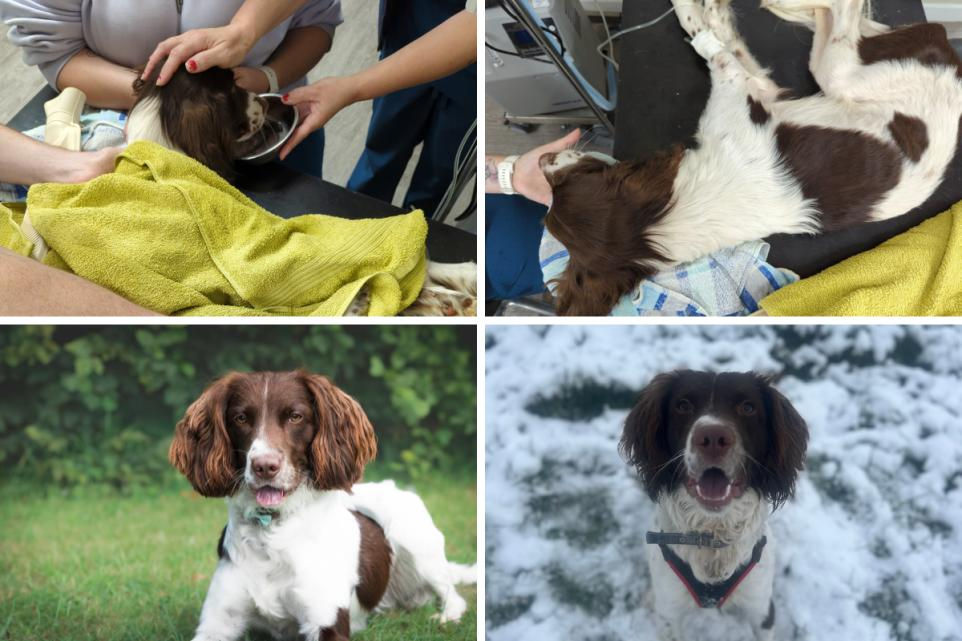
Emaciated dog’s journey from neglect to love (Image: RSPCA)
By Alec WhitakerSenior Court Reporter
Share
THESE pictures show the shocking conditions a married couple left their pets and the miraculous transformation of their emaciated dog who was given life-saving veterinary treatment.
Martin John-Mills Fitzgerald, 50 and Louise Fitzgerald, 48, were banned from owning animals for 10 years following a day-long trial after seven guinea pigs, four adult cats and three kittens, one of whom was dead, were found in a poor condition at their property in Franklin Street, Barrow.
The offences came to light when their Springer Spaniel called Blue was taken to a Wild Side vets in Barrow after collapsing on June 14 this year. He has now been adopted following eight months’ worth of rehabilitation.
The court heard staff were forced to cover him in bubble wrap to prevent him from losing heat when he was presented to the vets. He was also so weak he couldn’t sit or hold up his head for four days.
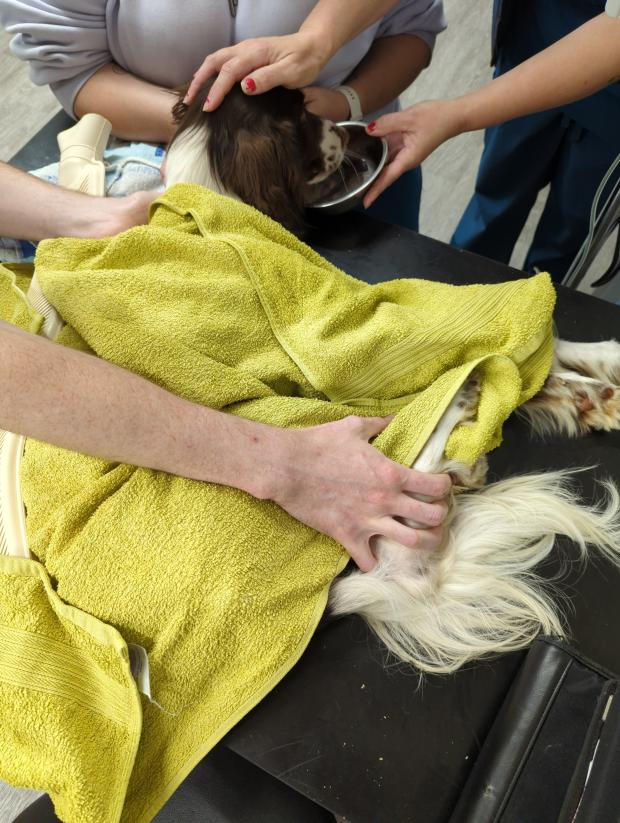
He weighed 10.1kg and was given the lowest body condition score possible, was said to be having fits and covered in fleas. Due to the nature of the information received by the RSPCA, Cumbria police were also contacted.
In his written evidence to the trial RSPCA Deputy Chief Inspector (DCI) Carl Larsson said: “The dog was in a collapsed state, unable to lift his head.
“He was very thin with his ribs, spine and pelvic bones very prominent. He was also crawling with live fleas with lots visible in the coat, particularly in the white parts.”
The vet who treated Blue said he was losing consciousness at one point after his eyes rolled into the back of his head. null (Image: Blue being treated at Wild Side vets. Credit: RSPCA)
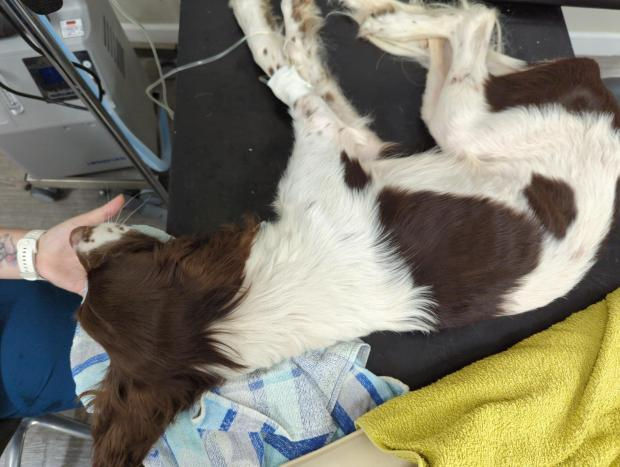
The following day the dog vomited up hay, straw and other plant matter, which suggested he had been eating what he could find on the floor, the vet said. He suspected this material would have been around the guinea pig enclosure.
DCI Larsson, accompanied by police, went to the defendants' home and were met with a strong smell of ammonia, most likely from animals urinating inside the property, which was generally messy and rubbish strewn.
null (Image: Blue being treated at Wild Side vets. Credit: RSPCA)
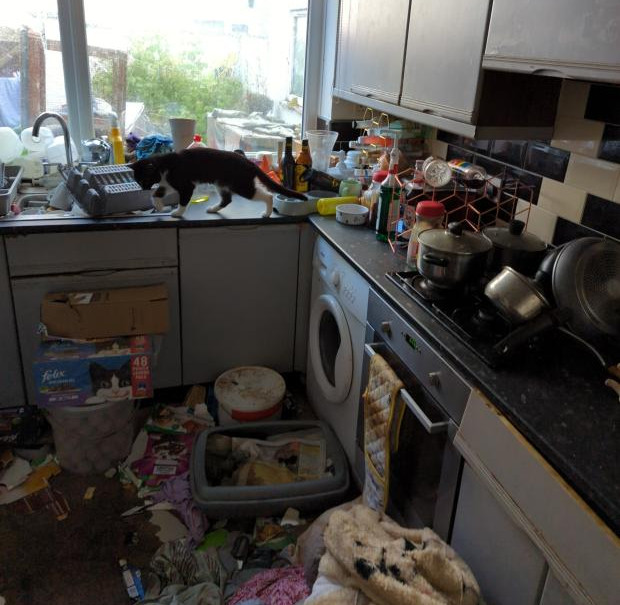
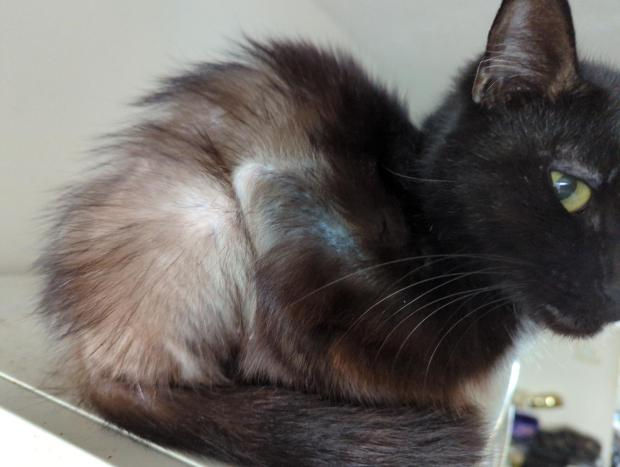
Four flea-infested adult cats were found inside, including a male called Blessing who had substantial fur loss. There were also seven guinea pigs living in unacceptable conditions in two heavily soiled cages.
null (Image: The conditions of the kitchen area. Credit: RSPCA)
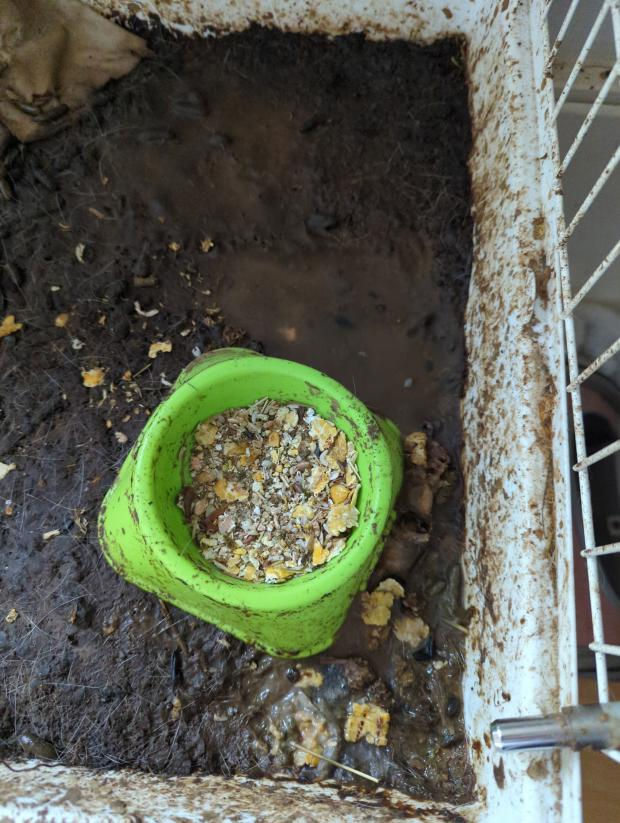
“The floor of the cage was covered with a thick layer of faeces,” DCI Larsson described in his written evidence.
null (Image: Guinea pig cage full of faeces. Credit: RSPCA)
“There didn’t appear to be any remnants of clean shavings or other bedding. There was one water bottle attached from the outside of the cage. This was completely empty but also dry.
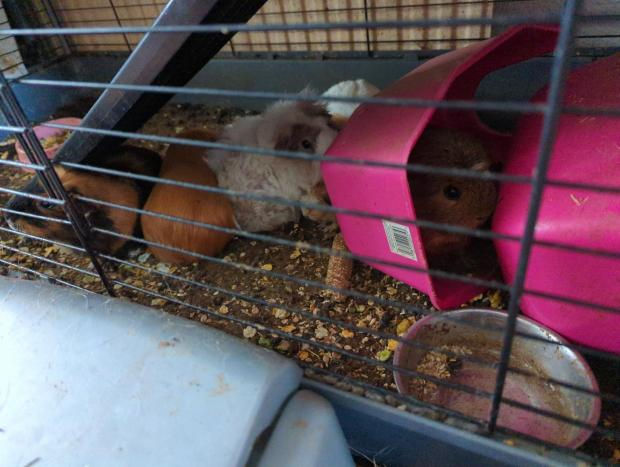
“I could see that all the guinea pigs were scratching and I was very concerned for a baby guinea pig as it did not look in a good way at all. It wasn’t moving much and appeared to be shaking.”
At the back door of the property was another cage containing a single guinea pig named Ninja. This enclosure had no form of bedding and was in an even worse state than the large communal cage. The floor was covered with faeces which had formed a filthy, wet, slick layer several inches thick. null (Image: Guinea pigs in their dirty cage. Credit: RSPCA)
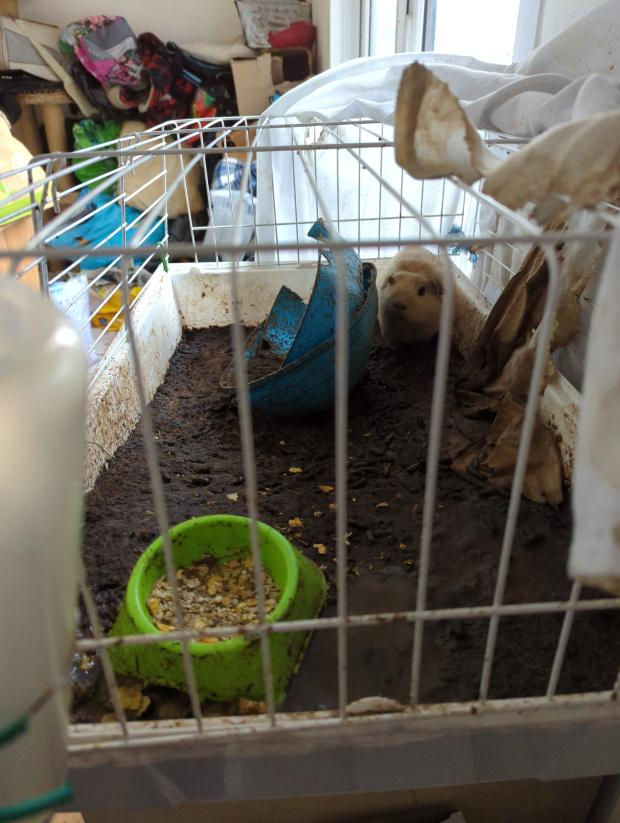
null (Image: Ninja the guinea pig in his cage. Credit: RSPCA)
The animals were all removed from the house with the assistance of the police and taken to Wild Side vets to be examined. The cats had been caused to suffer from a significant flea burden, the most evident in Blessing, whose condition the vet described as “chronic.”
Below: null (Image: Blessing the cat. Credit: RSPCA)
DCI Larsson said their poor body condition scoring and the way in which they ate and drank indicated they had not been provided with adequate food and water, with the minimum period “probably being several weeks to months.”
The largest communal enclosure was “grossly” too small for the amount of guinea pigs housed in it and the lack of fresh food and water and filthy conditions showed the animals were not being appropriately
cared for, the vet said.
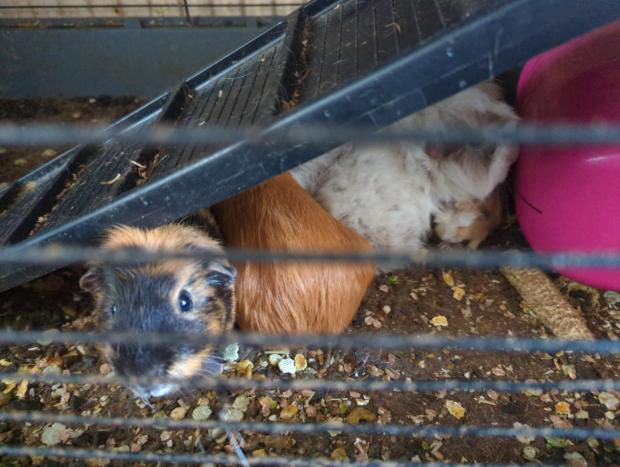
One Abyssinian guinea pig had untreated cuts and scars on her body, likely caused by fighting with others. The baby guinea pig, who sadly later died, was shaking and had poor fur and body condition. All the rodents smelt like they had a yeast infection, the court was told.
Three kittens with substantial flea infestations, one of whom was sadly deceased, were also removed from the house by the RSPCA during the course of null (Image: Guinea pigs in their cage. the investigation after the Fitzgeralds had
Credit: RSPCA) purchased them at a later date.
Blue remained at Wild Side vets until 27 June when he was transferred to the RSPCA’s East Lancs Branch to continue his recovery. By this time his weight had increased to 13.4kg.
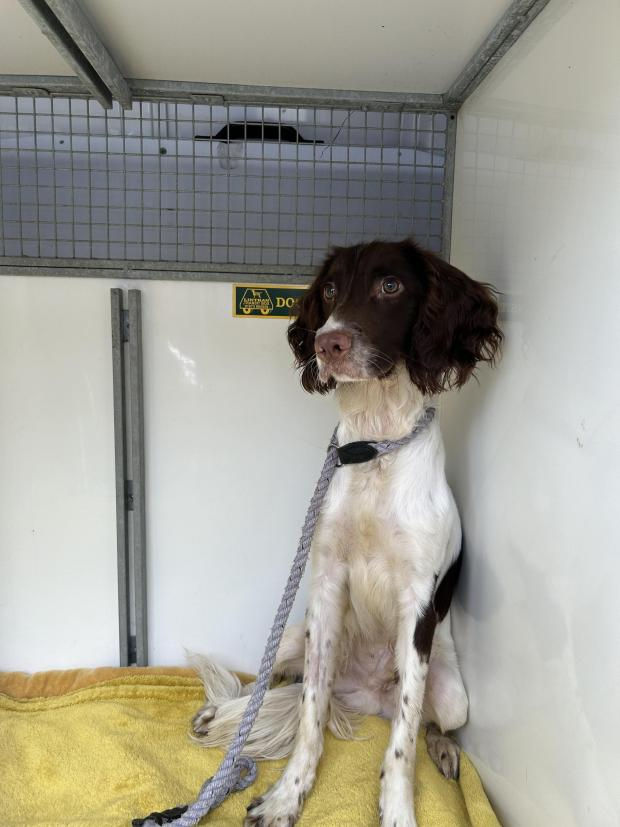
null (Image: Blue on the day he arrived in RSPCA care. Credit: RSPCA)
Animal Care Assistant Amy Robinson, who worked closely with Blue, said: “When he arrived he was too scared to walk and had to be carried into our reception. He went into a foster home straight away because he was so poorly he couldn’t stay in a kennel.
“Our amazing volunteer fosterer did such an amazing job that he gained enough weight and energy to come back to us one week later so we could start his rehabilitation.
“Blue was a very worried boy and didn’t trust people. He struggled to walk and lacked confidence.
“His kennel had to be completely padded with towels and quilts as he was still very unsteady and weak and trembly on his legs - he would often stumble and we didn’t want him to hurt himself.
“We put in a ramp to help him get between the front and the back of his kennel as lacked the co-ordination to manage more than a step.”
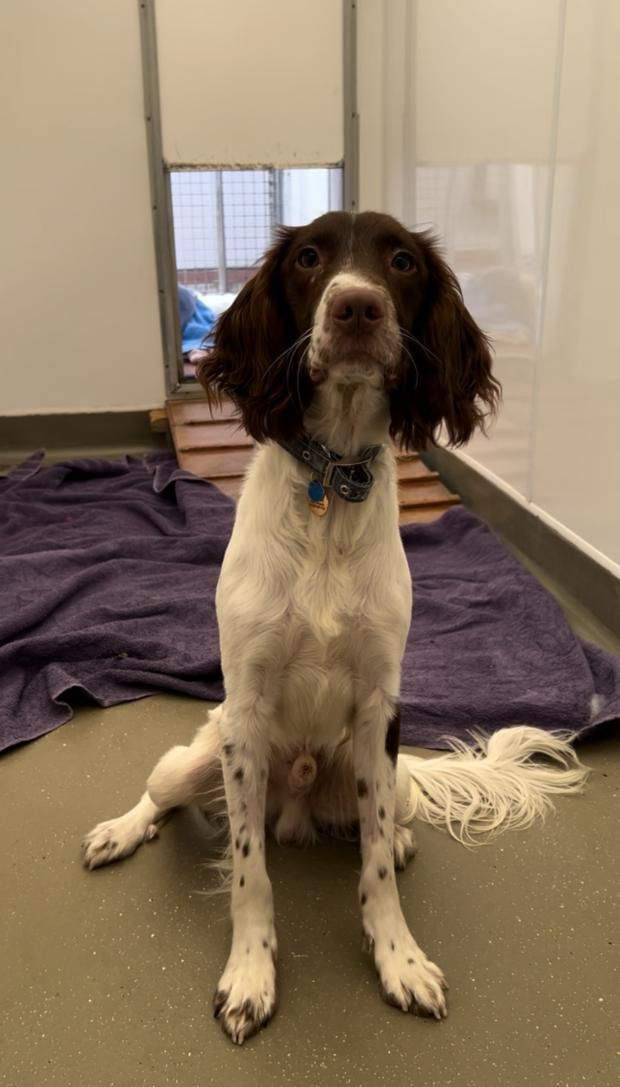
Blue learned to walk again with the help of a rehabilitation programme. He quickly gained muscle mass and started becoming more mobile. The centre then started to work on his loose lead training which, as a Springer Spaniel, he picked up straight away.
Ms Robinson added: “Blue is so clever and unbelievably resilient. His huge personality began to shine through and everyone at the centre fell in love with him. We discovered he loved water and squeaky tennis balls and he also enjoyed doing trick training, so he picked up lots of skills during his time with us.”
In December the RSPCA was given the go ahead to be able to legally rehome Blue after an order was made by the courts awarding ownership of all the surviving animals to the RSPCA.
null (Image: Blue in his kennel with towels and ramp. Credit: RSPCA)
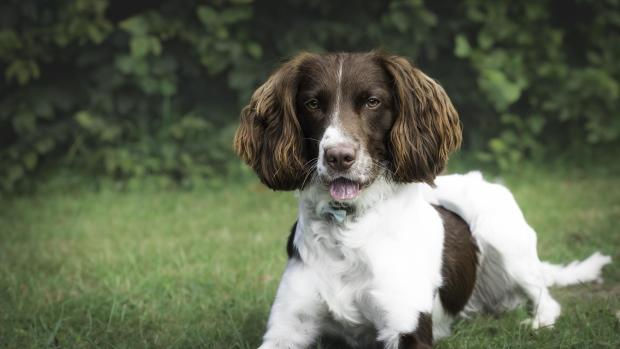
null (Image: Blue after being rehomed. Credit: RSPCA)
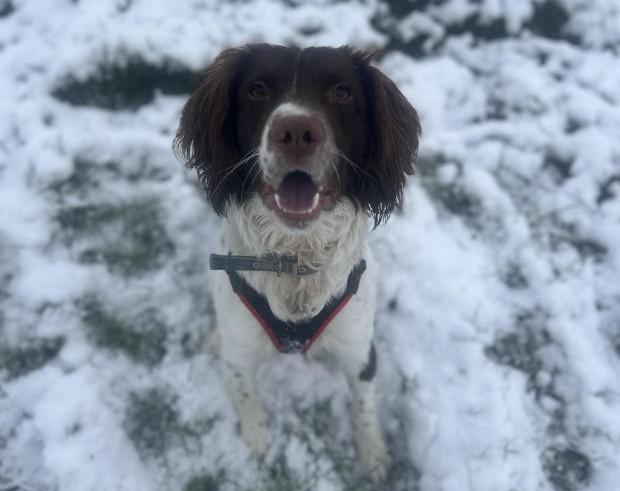
Once he was ready for adoption a new family quickly came forward to offer Blue a new home, visiting the centre numerous times to get to know him at his own pace and learn more about the ongoing training he needed.
Blue was adopted in February this year weighing 18kg. Although he still has a head tremor it has significantly reduced and he is now much more confident.
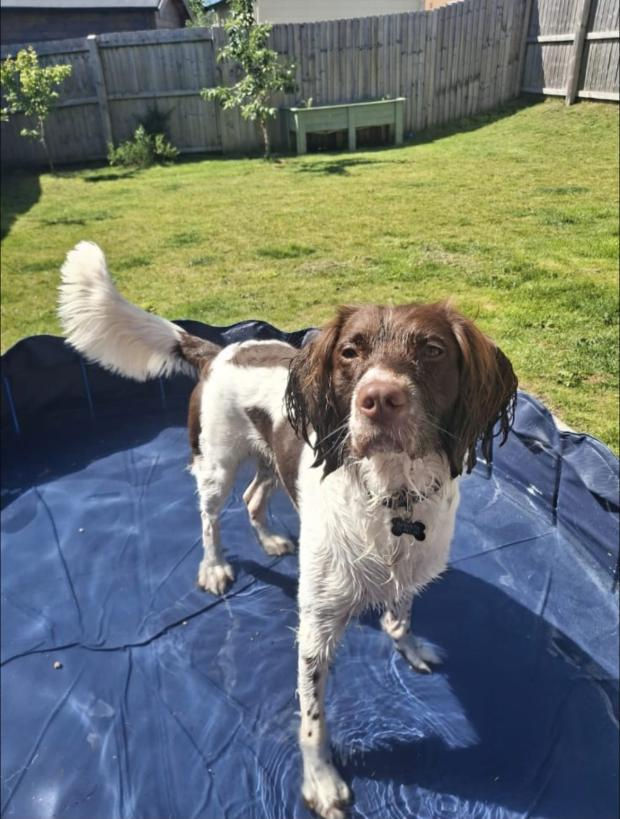
null (Image: Blue after being rehomed. Credit: RSPCA)
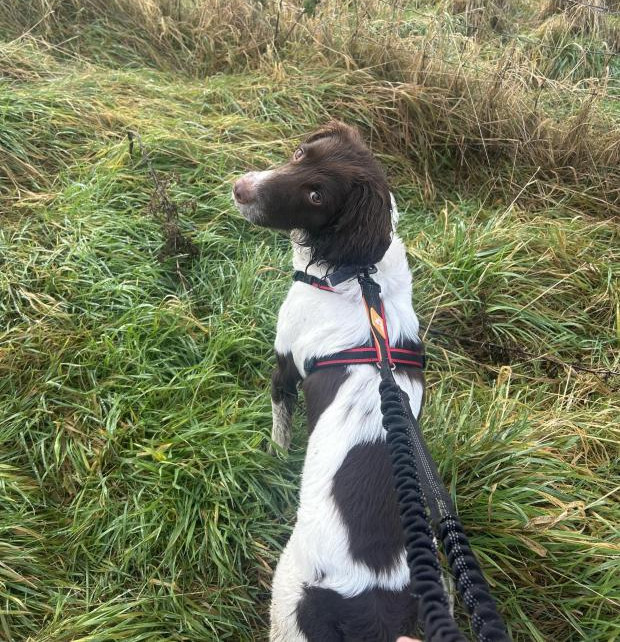
null (Image: Blue after being rehomed.Credit: RSPCA)
Martin and Louise Fitzgerald were both ordered to pay a fine of £300 and a victim surcharge of £120. They cannot contest their disqualification order for five years. The court was told the couple were people who cared for their animals but lacked the capacity to do so.
Speaking after the trial had concluded Deputy Chief Inspector Larsson said: “This was a tragic case where a large number of pets had been caused to suffer through Martin and Louise Fitzgerald’s failure to properly meet the needs of the animals in their care.
“Much of this suffering could have been avoided with very basic veterinary intervention, and the ten-year ban reflects the seriousness of what happened. Thankfully the majority of the animals recovered and have found loving homes.
“The photos of Blue enjoying life with his new owners after he so nearly lost his life are wonderful to see. I’d like to say a huge thank you to Wild Side vets for everything they did to save him, and to our team at Lancashire East Branch for providing many months of ongoing care and rehabilitation.”


